Irish Pub NYC Adventures for Locals and Travelers Alike

New York has never had trouble borrowing from elsewhere and making it its own. That is part of the city’s genius. It absorbs accents, rituals, recipes, and room styles, then sets them under brighter lights and faster clocks. The Irish pub is one of the clearest examples. In Manhattan, Brooklyn, Queens, the Bronx, and Staten Island, the form endures because it does more than pour stout and whiskey. It gives people a place to arrive without ceremony.
A good Irish Pub NYC regular will tell you that the best spots do not feel manufactured. They feel settled. The wood has a little wear to it. The bartenders know when to chat and when to leave someone alone. There is a television somewhere, usually with a match on, but it does not dominate the entire room. The music sits at the edge of hearing unless the night calls for a louder hand. A traveler can step in for one pint and feel welcome. A local can spend ten years returning and still find something familiar enough to count on.
That balance matters more in New York than almost anywhere else. People here are moving quickly, meeting deadlines, changing neighborhoods, making plans they may cancel by six o’clock. A pub that asks very little of you, beyond basic decency and a tab you can settle, becomes a kind of civic service. It is not just a drinking venue. It is a waiting room before the theater, a refuge after a delayed train, a first date site, a reunion space, a place to watch the All-Ireland final at an hour that would be unreasonable in other cities.
What makes an Irish pub in New York worth your time
The phrase “Irish pub” gets stretched in New York. Some places are genuinely rooted in Irish ownership, staffing, and community history. Others borrow the visual language, dark wood, mirrors, Guinness signs, shamrocks around March, but operate more like sports bars or tourist funnels. There is nothing inherently wrong with that. A packed Midtown room serving a decent pint to office workers and visitors has its place. Still, there is a meaningful difference between a pub that uses Irish identity as decoration and one that treats hospitality as a house rule.
Usually, you notice the difference in the small things. The pour is patient. Someone behind the bar can suggest a whiskey without reciting marketing copy. The soda bread or shepherd’s pie, if offered, tastes like it was made for people who might actually order it more than once. The room is built for lingering, not just turnover. Even the noise level tells you something. In the better pubs, conversation can survive.
New York’s Irish pub culture also reflects several generations of immigration and neighborhood change. The old-line establishments, especially in parts of Manhattan and the outer boroughs, often carry a social memory that extends beyond décor. Contractors, firefighters, teachers, nurses, transit workers, and city employees have long treated these places as extensions of home turf. At the same time, newer pubs have made room for a younger crowd that wants quality beer, a serious back bar, and food stronger than frozen appetizers. The best rooms bridge those worlds.
The neighborhoods shape the pint
It is impossible to talk about the Irish pub experience in New York as if the city were one unified drinking district. Each neighborhood changes the mood, the pricing, the crowd, and even the purpose of the pub.
Midtown is where many travelers encounter the category first. The upside is convenience. If you are staying near Times Square, Grand Central, or Penn Station, there is almost always an Irish pub within a short walk. These places can be lifesavers after a long flight or a day of meetings. They are often open early, used to volume, and skilled at feeding people quickly. The downside is predictability. Some feel interchangeable, and some charge accordingly. You go to Midtown pubs for reliability, not revelation.
Downtown Manhattan offers more range. In the Financial District, the pub often serves the after-work crowd, and timing matters. Arrive too early and you may get a quieter, almost stately atmosphere. Arrive at peak hour and the room changes into a fast, shoulder-to-shoulder scene. In the Village or East Village, the Irish pub often picks up a more eclectic audience, students, neighborhood lifers, industry workers, and visitors who wandered in after dinner. These rooms can surprise you, especially if they have preserved an older interior while the streets outside keep reinventing themselves.
The outer boroughs tell another story. In parts of Queens and the Bronx, a neighborhood Irish pub may still function like a community anchor. Brooklyn pubs vary widely, from old-school corner bars with roots in family ownership to polished new spaces designed for weekend traffic and social media photos. One is not automatically better than the other. Still, if you want to understand the city rather than just consume it, spending an evening in a pub where locals discuss schools, union jobs, rent increases, and the Knicks gives you more than a cocktail lounge ever will.
For travelers, the pub is often the smartest first stop
There is a reason so many visitors end up in an Irish pub on their first night in the city. Jet lag and overstimulation make decision-making harder than travel guides admit. A pub cuts through that. You know roughly what you are getting, the menu tends to be forgiving, and you can usually sit alone without attracting attention.
For solo travelers especially, the Irish Pub NYC landscape can feel less transactional than many trend-driven venues. In a cocktail bar, sitting by yourself can sometimes feel like a statement. In a pub, it just feels normal. You can order a pint, a bowl of soup, maybe fish and chips if the kitchen takes itself seriously, and reset your nervous system. If you are lucky, the bartender gives you one useful recommendation, maybe a nearby music venue, maybe the best route to a museum, maybe a warning not to waste your evening in a place designed entirely for tourists.
The practical advantages are real. Pubs usually keep longer kitchen hours than more formal restaurants. They https://manuelwtyp173.wpsuo.com/the-social-appeal-of-an-irish-pub-nyc-crowd-loves handle groups without too much fuss. They tolerate weather refugees. During winter, few things in the city feel better than pushing through a cold sidewalk wind into a warm pub with windows fogged from inside. During summer, they offer the opposite kind of relief, darkened interiors, cold taps, and air-conditioning strong enough to erase a humid subway ride.
Travelers should still use judgment. Not every pub near a landmark deserves your money. If the menu is laminated into oblivion, the host is waving people in from the sidewalk, and every inch of wall space is trying to sell you branded merchandise, that is a clue. It may still be fine for a quick pint, but probably not where the city reveals itself.
For locals, loyalty is earned slowly
New Yorkers are spoiled for choice and wary of disappointment. A local does not keep returning because a place claims authenticity. They return because the room delivers on ordinary Tuesdays. That is where pubs either become part of someone’s life or slide into the category of acceptable but forgettable.
The neighborhood regular notices details a visitor may miss. Is the Guinness consistently good, not just on St. Patrick’s week when staff are on maximum alert? Does the kitchen hold up after 9 p.m.? Are the bartenders skilled at reading the room, shifting from lunch pace to game-time pace without losing control? Does the pub become unbearable when a major soccer match is on, or does it somehow remain functional for people who came to talk?
Value matters too. New York drink prices have climbed almost everywhere, and the Irish pub is not exempt. What locals tend to forgive is not high pricing by itself, but pricing without substance. If you are charging premium Manhattan rates, the pint needs to be right, the service needs to be sharp, and the space should offer more than themed wallpaper. People will pay for quality. They resent paying for costume.
There is also the question of emotional reliability. Every neighborhood has bars that are exciting once and exhausting after that. A pub survives because it can host multiple versions of your day. You can bring your parents there when they visit. You can meet friends there before a concert. You can sit alone after bad news and trust that nobody will make the moment worse. That kind of flexibility is hard to build and easy to overlook.
The anatomy of a memorable pint
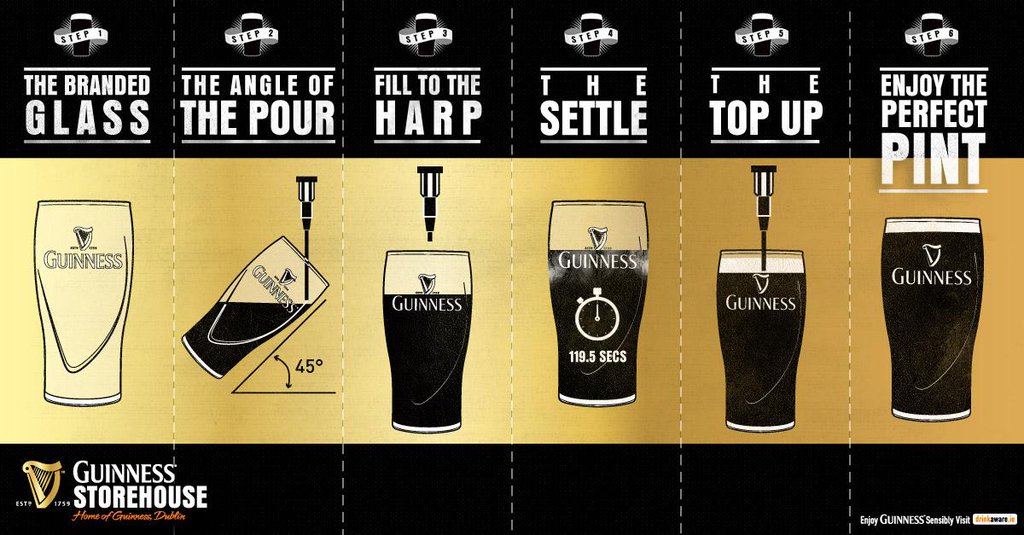
Guinness has become a social media object in the last few years, with endless debates about the tilt of the glass, the settle time, and the proper head. Some of that attention is useful, since stout does suffer when handled badly. Some of it is performative. The truth is simpler. A memorable pint comes from clean lines, proper temperature, patient pouring, and staff who care enough not to rush what should not be rushed.
You can tell a lot by watching the bar for three minutes. Does the bartender move with confidence or with haste? Is the glassware clean? Are pints landing on the bar with a creamy top and a defined line between body and head, or are they spilling over and getting wiped down as an afterthought? In a city where speed often wins, a pub that slows down just enough to serve beer properly signals respect for the drink and the customer.
Of course, not everyone is there for stout. Many Irish pubs in New York now carry a broader draft list, local lagers, rotating IPAs, ciders, and the occasional craft stout that tries to challenge the house classic. Whiskey programs have deepened too. Some bars still focus on the familiar names and pour them well. Others build thoughtful Irish whiskey selections that reward curiosity without intimidating casual drinkers. The best bartenders guide rather than lecture. They might say, if you like Jameson but want something with a bit more body, try this one. That is enough.
Food follows the same principle. There is no requirement that every Irish pub make transcendent shepherd’s pie. But if a place offers a pub menu, certain dishes should clear a basic standard. Soup should taste seasoned, not reheated. Brown bread should not feel decorative. Fish and chips should arrive crisp, not tired. In a city where rent pressures push many bars to outsource quality, an Irish pub that still cares about the kitchen earns a long memory.
When to go, and when to think twice
Timing changes the entire experience. The same pub can feel generous at 5 p.m., chaotic at 7 p.m., sleepy at 3 p.m. On a Sunday, and electric during a major football or rugby match. That is not a flaw. It is part of the genre. The smart move is matching your mood to the room’s likely rhythm.
If you want conversation, early evening on a weekday is often the sweet spot. The after-work crowd has energy, but the room has not yet tipped into noise. If you want atmosphere and don’t mind compression, game days and weekend nights can be excellent, especially in pubs with a genuine sports culture rather than a generic screen addiction. If you want a seat and some space, late lunch or the hour just after opening can reveal a place more honestly than the busiest times ever will.
There are a few practical habits that improve the odds of a good visit:
- If you care about watching a specific match, call ahead and ask whether they will have sound on.
- If you are meeting a group larger than four, arrive early or make a reservation where the pub allows it.
- If you want food from the kitchen, check the service hours, because many bars keep different schedules than the front room suggests.
- If you are stout-focused, order from a place that is actively pouring it, not from a nearly empty room where the tap has had no movement.
- If the sidewalk outside is all promotional energy and no actual regulars, keep walking unless convenience is your only goal.
Those are not hard rules. I have had very decent pints in obvious tourist corridors and mediocre ones in supposedly serious pubs. Still, the pattern holds often enough to be useful.
The social life of the room
An Irish pub succeeds or fails on atmosphere, which is harder to define than décor and more important than any menu item. The strongest rooms create a feeling of low-pressure belonging. That can mean banter at the bar, but it does not have to. Plenty of excellent pubs are quiet in the right ways. The common denominator is ease.
Part of that ease comes from hospitality style. In many New York bars, service can veer toward either overperformance or indifference. The classic pub approach sits in the middle. You are acknowledged quickly, served capably, and left with just enough room to settle in. If conversation happens, it happens naturally. Nobody is trying to convert your drink order into a personality test.
Sports play a major role in this social ecosystem. Irish pubs are among the few places in the city where a Premier League morning, a Six Nations afternoon, and an NBA evening can coexist without the room losing its identity. That variety broadens the crowd. It also produces one of the nicest features of pub culture, strangers can share a temporary language. A traveler asking what the chant means, a local explaining why everyone groaned at a referee’s decision, a bartender sliding over an extra napkin while giving a one-sentence history lesson, those moments are small, but they are the stuff of memorable nights.
Music can push the room in either direction. Traditional sessions, when done for the room and not for gimmick value, can be wonderful. They change the air. But they can also overwhelm a tight space if the acoustics are poor or the amplification is heavy-handed. Again, judgment matters. The best pubs know when live music adds warmth and when it turns a social room into an endurance test.
St. Patrick’s Day is not the whole story
Every March, the city performs a loud, crowded version of Irishness. Some people love it. Some avoid it completely. Both instincts make sense. St. Patrick’s Day in New York can be fun in the broad civic sense, full sidewalks, parade spillover, old friends making annual appearances, but it is a poor day for assessing a pub on its normal merits.
If you actually want to understand Irish pub culture here, go in February or April. Go on a damp Thursday. Go after work when the room fills gradually instead of all at once. Go on a Sunday afternoon when families drift through and older regulars claim their customary spots. Ritual days reveal one kind of truth. Ordinary days reveal the one that lasts.
That matters because Irish pub culture in New York is not just holiday branding. It has deep ties to labor history, parish life, county associations, and neighborhood identity. Even where those old structures have loosened, their influence remains visible in the rhythms of the room. Certain pubs still function as informal community offices, job boards, reunion points, and fundraising spaces. Others have adapted into broader urban gathering spots while keeping that thread of mutual recognition. Either way, the best places never reduce themselves to green beer and novelty hats.
How to find the right pub for your night
People often ask for “the best” Irish pub in New York, but that is the wrong frame. The better question is best for what. A pre-theater pint requires one kind of room. A long catch-up with old friends needs another. Watching an early soccer match calls for a place with commitment and breakfast tolerance. Bringing out-of-town relatives means finding somewhere lively but not punishing.
A few distinctions help narrow the field:
- For convenience, choose location first, then look for signs of actual neighborhood traffic.
- For conversation, prioritize smaller rooms with a real bar presence over giant entertainment complexes.
- For beer quality, watch what other people are ordering and how the staff handle the taps.
- For food, trust places where locals are eating full meals, not just picking at fries.
- For atmosphere, seek pubs that feel comfortable before they feel photogenic.
One overlooked strategy is to spend ten minutes at the bar before committing to a full night. Order one drink, look around, listen to the room, and decide. New York rewards mobility. If the energy is off, leave. If the room settles your shoulders almost immediately, you found something worth keeping.
Why the format endures in a city that rarely sits still
Trends come and go in New York at a ridiculous pace. Wine bars flare up, natural wine replaces cocktail dens for a season, themed interiors flood social feeds, then vanish when rent renewals come due. The Irish pub remains because it answers needs that trendier formats often ignore. People want rooms that are legible. They want service that is warm without theater. They want places where one drink can become three hours without anyone rushing them toward the next branding exercise.
There is also an architectural truth to it. Dark wood, defined bar rails, mirrors, booths, and a little compression in the seating all encourage a certain kind of social behavior. These rooms make you lean in. They soften the glare of the city. Good pub interiors are not nostalgic by accident. They are practical machines for comfort.
For locals, that means continuity. For travelers, it means access. Not every Irish pub in New York will be special, and not every special one announces itself from the sidewalk. But when you find the right place, the city briefly changes scale. It becomes less abstract, less performative, more human. A bartender remembers your second order. A nearby table starts debating hurling, baseball, or city politics. The rain outside stops mattering. You are no longer just passing through New York or enduring it. You are participating in one of its oldest and most useful arts, finding a room where strangers can become familiar enough for the evening, and where the night feels grounded by something sturdier than hype.
Hibernia Bar
401 W 50th St
New York, NY 10019, United States
Phone: +1 212-969-9703
FAQ About Irish Pub NYC
What is the best Irish pub in NYC?
The best choice depends on your location and preferred atmosphere. Hibernia Bar is a neighborhood Irish pub in Hell's Kitchen offering Guinness, Irish whiskey, pub food, and sports viewing.
Where do Irish people go in NYC?
New York's Irish community gathers in many neighborhoods and venues. Hibernia Bar welcomes Irish expats, local residents, and visitors at 401 W 50th St, just off Ninth Avenue.
Where can I watch GAA games in New York?
Hibernia Bar lists GAA among the sports it shows. Call +1 212-969-9703 to confirm coverage and opening times for a particular match before visiting.
What is the difference between a bar and a sports bar?
A sports bar emphasizes televised games and a shared viewing atmosphere. Hibernia combines sports viewing with the food, drinks, and hospitality of a neighborhood Irish pub.